
Large RV Glass Covered Without a Shop or Power Hookup
RV window tinting in Traverse City for rigs turning into heat boxes through oversized side glass
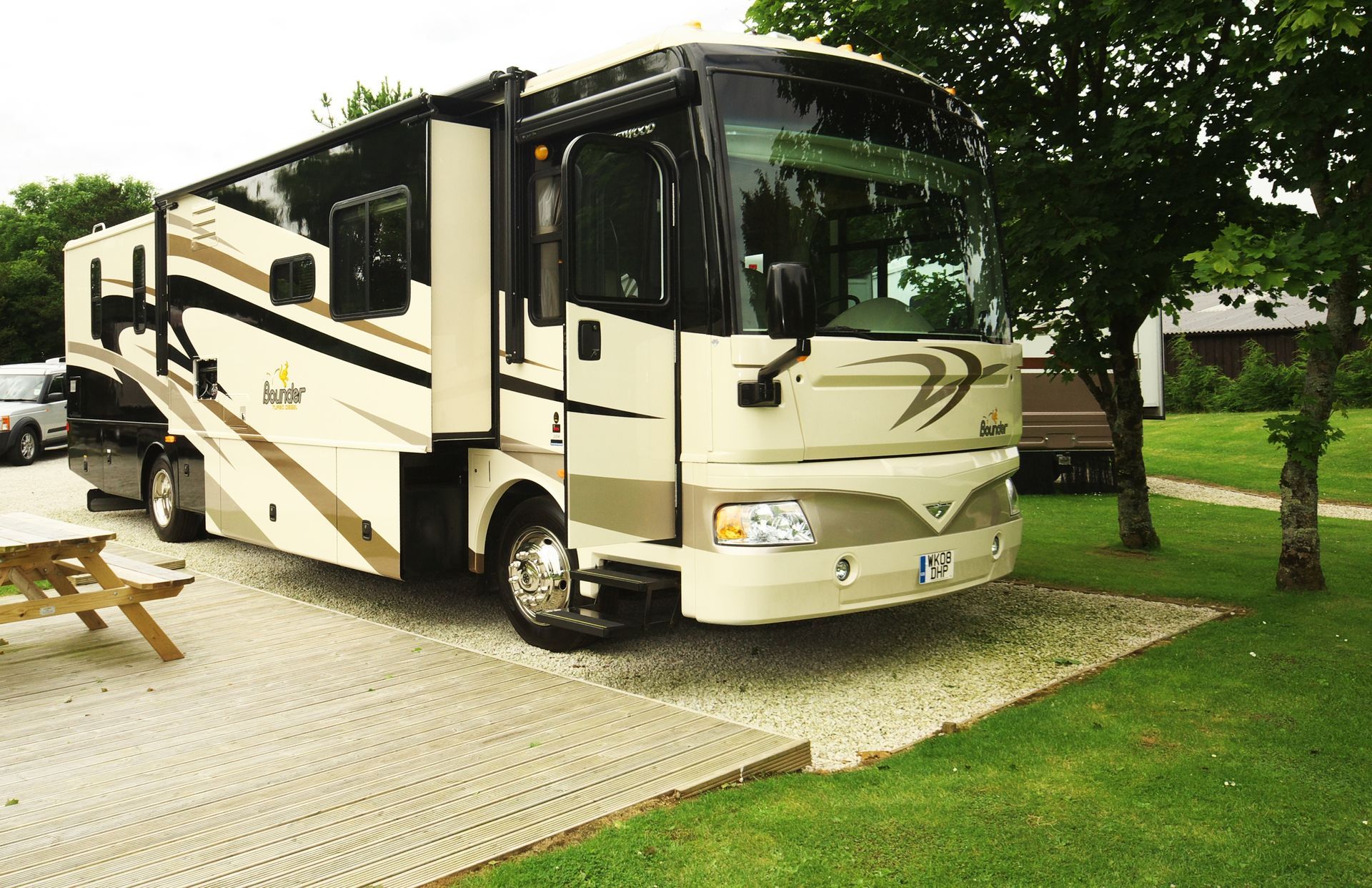
Large RV side windows create a greenhouse effect that a small automotive air conditioner cannot keep pace with because the glass surface area is simply too large relative to the cooling capacity. Running the AC at full output to compensate shortens compressor life and burns through propane or shore power faster than necessary. Ceramic window film applied to those large panes rejects infrared heat before it enters the cabin, reducing the load on the cooling system rather than just responding to the heat after it builds. Caldwell Mobile Detailing LLC performs RV window tinting in Traverse City as a mobile service, arriving fully self-powered so no campsite hookup or storage lot power connection is required.
Every RV glass surface is scraped clean with razor blades before film is cut and applied. RV glass accumulates baked-on bug residue, sap, and road dust that bonds to the surface over highway miles and cannot be removed with spray cleaner alone. Any particle left under the film creates a bubble point that grows over time, which is a more visible problem on large RV panes than on standard car windows because the surface area is larger and defects are easier to see. Once the glass is confirmed clean, thick ceramic film is custom-fit to each window shape and squeegeed smooth from center to edge. The generator onboard the mobile rig powers the equipment without any coordination with campground management or storage facility staff.
Describe your RV's window configuration and current storage or campsite location to confirm how the appointment is structured before the service date.
How Ceramic Film Performs Differently Than Dyed RV Tint
Dyed plastic film is the cheapest option in the RV tinting category and also the one that fails most visibly on large windows. The dye breaks down under sustained UV exposure, producing purple discoloration and brittleness that leads to bubbling across the film surface. On a large RV side window, that failure is immediately obvious and degrades the appearance of the entire rig. Ceramic film contains nano-ceramic particles within the film structure, not a surface dye, so the material resists both discoloration and the brittleness that causes bubbling. Caldwell Mobile Detailing LLC uses ceramic film on all RV applications because the larger the window, the more damaging a film failure looks—and the more labor-intensive a re-application becomes.
After ceramic film is installed, the interior of the RV is noticeably cooler when parked in direct afternoon sun because the film is rejecting infrared radiation rather than simply tinting the view. Surfaces that previously heated to the point of being uncomfortable to touch—dashboard extensions, side table surfaces near windows, and sleeping area walls adjacent to large glass panels—stay significantly lower in temperature. The air conditioning system cycles less frequently because the heat load it is working against has been reduced at the source.
RVs stored at facilities near Interlochen and Fife Lake often sit for extended periods between trips, and film installed during storage remains fully effective when the rig is put back into service. The ceramic material does not require the RV to be in active use to maintain its properties, and the mobile installation process means there is no reason to transport the unit to a shop before the next trip just to get tinting done.
Questions Before Starting Your RV Tinting Project
These questions address the installation process, material choices, and practical logistics for RV owners in Traverse City considering ceramic window film for their unit.
Why does RV glass need to be scraped with razor blades rather than wiped with glass cleaner?
Highway travel bonds bug residue, sap, and dust directly to the glass surface in a way that spray cleaner cannot break. Razor blades remove those bonded layers mechanically, leaving a surface the film adhesive can contact uniformly without particle interference.
How is ceramic film cut to fit the irregular shapes of large RV windows?
Film is custom-cut to match each window's specific dimensions and profile before application. Oversized sheets trimmed on-site are less precise than panels cut to the window shape first, which is why fit quality at edges and corners matters for long-term adhesion.
What happens to dyed film on large RV panes after one summer of heavy sun exposure?
Dyed film loses its plasticizer under sustained UV heat, stiffening and separating from the glass in bubbles that begin at the corners and edges. The discoloration to purple is a separate failure from the bubbling, and both typically appear within the first season on large panels facing direct sun.
Does the self-powered mobile unit work at campgrounds that do not allow external electrical connections?
The mobile rig operates on its onboard generator and does not require any connection to campground power pedestals or storage lot outlets, so facility electrical policies do not affect whether the service can be performed at your location.
How do you confirm installation quality on large RV windows before the technician leaves?
Walk the exterior of the rig and inspect each window at an angle in natural light. Correctly installed film shows no bubbles, no visible particle inclusions, and consistent edge contact with no gaps or lifting at corners. Any defect visible at this stage should be addressed before the visit concludes.
Caldwell Mobile Detailing LLC also installs RV window tinting in Interlochen, Kingsley, Acme, Grawn, and Fife Lake. Call (231) 633-7512 to confirm your RV's location and window layout before scheduling the installation visit.