Paint Protection That Bonds Instead of Sitting on Top
Ceramic coating in Traverse City for clear coats dulled by road salt brine, bird droppings, and tree sap
The difference between wax and ceramic coating is not a matter of shine—it is a matter of what the protective layer does when contamination hits the paint. Wax sits on the surface and breaks down within weeks under normal driving conditions. Liquid quartz ceramic coating bonds chemically to the clear coat and forms a layer that repels salt brine, bird droppings, tree sap, and UV damage without requiring monthly reapplication. Caldwell Mobile Detailing LLC performs ceramic coating in Traverse City as a mobile service, handling the full preparation and application process at your location.
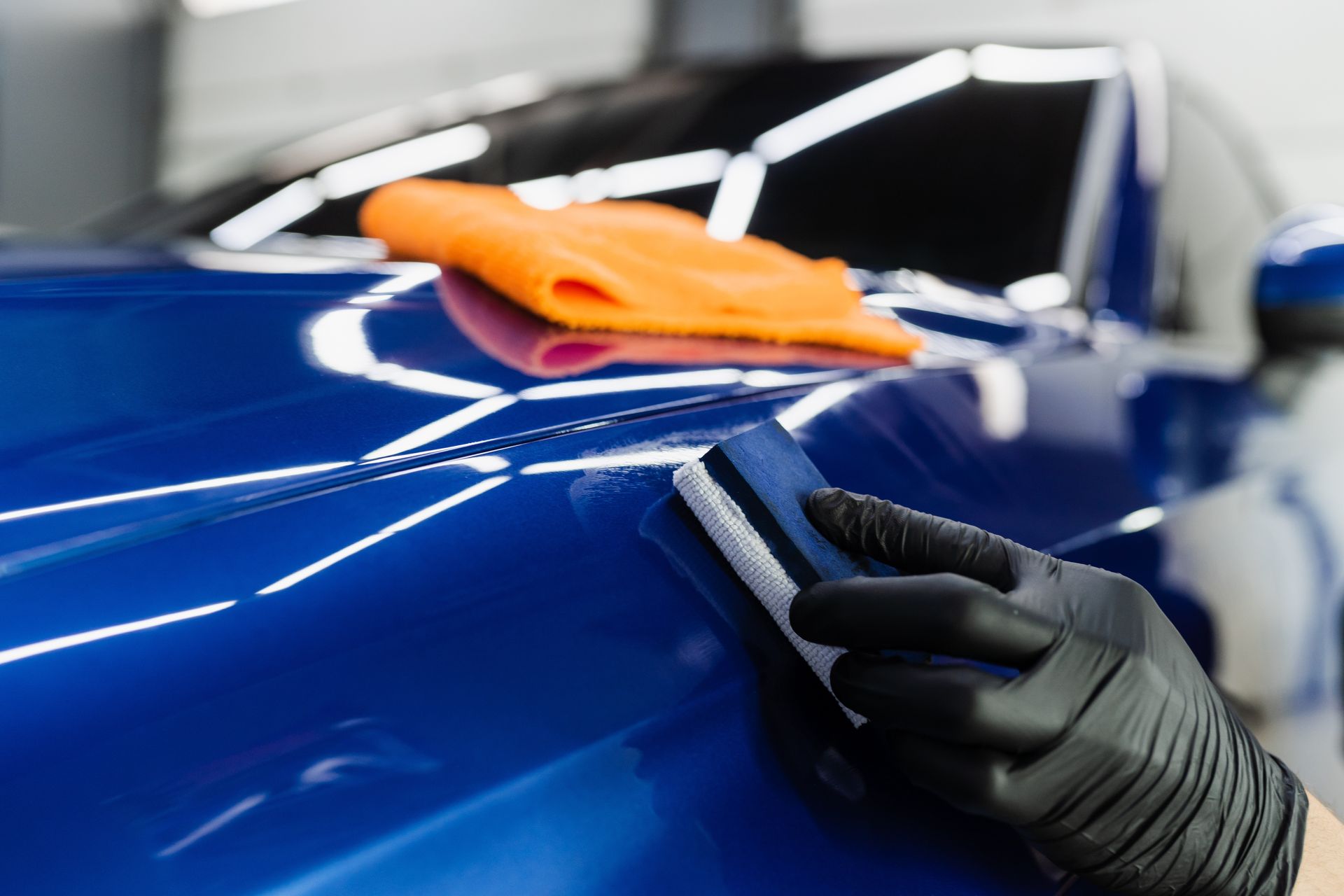
Preparation is where ceramic coating jobs succeed or fail. The process starts with an exterior decontamination wash, followed by a clay bar treatment to pull out embedded particles from the paint surface. A complementary polish step follows—not to remove scratches, but to create the cleanest possible bonding surface before the coating goes down. Any contamination left on the paint at that stage will be sealed in rather than repelled. Once the surface is fully prepped, thick liquid quartz coating is hand-applied to all exterior panels. Annual inspection and a boost reapplication are required to maintain the warranty that comes with the service.
Request a paint condition assessment to determine the preparation steps your specific vehicle requires before coating can be applied correctly.
How the Prep Sequence Determines Coating Performance
Ceramic coating performance over time is directly tied to the quality of the surface it bonds to. The decontamination wash removes surface-level dirt; the clay bar removes what the wash cannot—embedded particles that have worked into the clear coat over months of driving. The polish step that follows creates a uniformly clean, lightly abraded surface that gives the liquid quartz coating maximum mechanical grip during the bonding process. Skipping or compressing any of these steps produces a coating that appears correct at installation but degrades faster because the bond is weaker.
After the coating cures, paint behavior changes in observable ways. Water beads and sheets off panels rather than sitting flat. Contamination like bird droppings and sap does not bond into the clear coat the way it does on unprotected paint, which means it can be rinsed or wiped away rather than requiring compound removal. The surface maintains a consistent gloss without the uneven patches that develop when wax breaks down unevenly across a panel. Vehicles in the Acme and Grawn areas accumulate road salt residue during winter months, and the coating's chemical resistance means salt brine contacts the coated surface rather than the clear coat directly.
The annual inspection visit included with the warranty serves a practical purpose beyond upkeep: it allows the operator to assess whether the coating has thinned in high-contact areas—door edges, hood leading edges, and mirrors—where mechanical wear is heaviest. A boost reapplication to those areas extends the full coating's effective life without requiring a complete recoat of all panels.
Answers About How Ceramic Coating Is Applied
These questions address the preparation, application, and maintenance steps involved in a ceramic coating service for vehicle owners in Traverse City considering the process.
Why is clay bar treatment required before ceramic coating can be applied?
Clay bar removes embedded particles—rail dust, industrial fallout, and road contamination—that have worked into the clear coat and cannot be removed by washing. If those particles remain, the coating bonds over them and seals the contamination in permanently.
What does the complementary polish step do, and does it remove scratches?
The polish used in the prep sequence is designed to create a clean, lightly uniform surface that maximizes chemical bonding—it is not a scratch-removal compound. Deep scratches in the clear coat will still be visible after coating because the coating follows the surface contour rather than filling defects.
How does the annual inspection maintain the warranty?
The inspection identifies areas where coating thickness has decreased due to mechanical wear at door edges, the hood leading edge, and mirrors. A boost reapplication to those areas restores the protective layer and satisfies the warranty maintenance requirement for the following year.
What is the correct way to wash a coated vehicle to avoid degrading the surface?
Hand washing with a pH-neutral soap and a clean microfiber mitt preserves the coating longest. Automated brush washes introduce abrasive contact that wears down the coating layer faster than hand washing does.
How does ceramic coating handle bird droppings differently than waxed paint?
On waxed paint, bird droppings etch into the clear coat within hours in warm conditions because the wax layer degrades quickly. On a properly bonded ceramic coating, the droppings sit on the coating surface and can be removed with water and a cloth before etching occurs, protecting the clear coat underneath.
Caldwell Mobile Detailing LLC also applies ceramic coating in Interlochen, Kingsley, Acme, Grawn, and Fife Lake. Call (231) 633-7512 to discuss your vehicle's paint condition and schedule the decontamination and preparation appointment.