Oxidized Gelcoat and Paint Brought Back to Clarity
Paint and Gel Correction in Traverse City for boats and RVs with oxidized, scratched, or swirl-damaged surfaces that have lost reflective depth
Gelcoat on fiberglass hulls and marine surfaces behaves differently from automotive clear coat under polishing—it is thicker and more porous, which means oxidation penetrates deeper before it becomes visible as chalkiness, and contaminants embed into it more aggressively during storage and water use. Caldwell Mobile Detailing LLC performs machine paint and gel correction in Traverse City on boats and RVs using self-powered mobile equipment that arrives fully equipped to your location. Vessels and coaches stored near the water access corridors around Leland and Glen Arbor accumulate a specific combination of oxidation, mineral deposit bonding, and light surface marring that develops during active use and deepens during off-season storage without intervention.
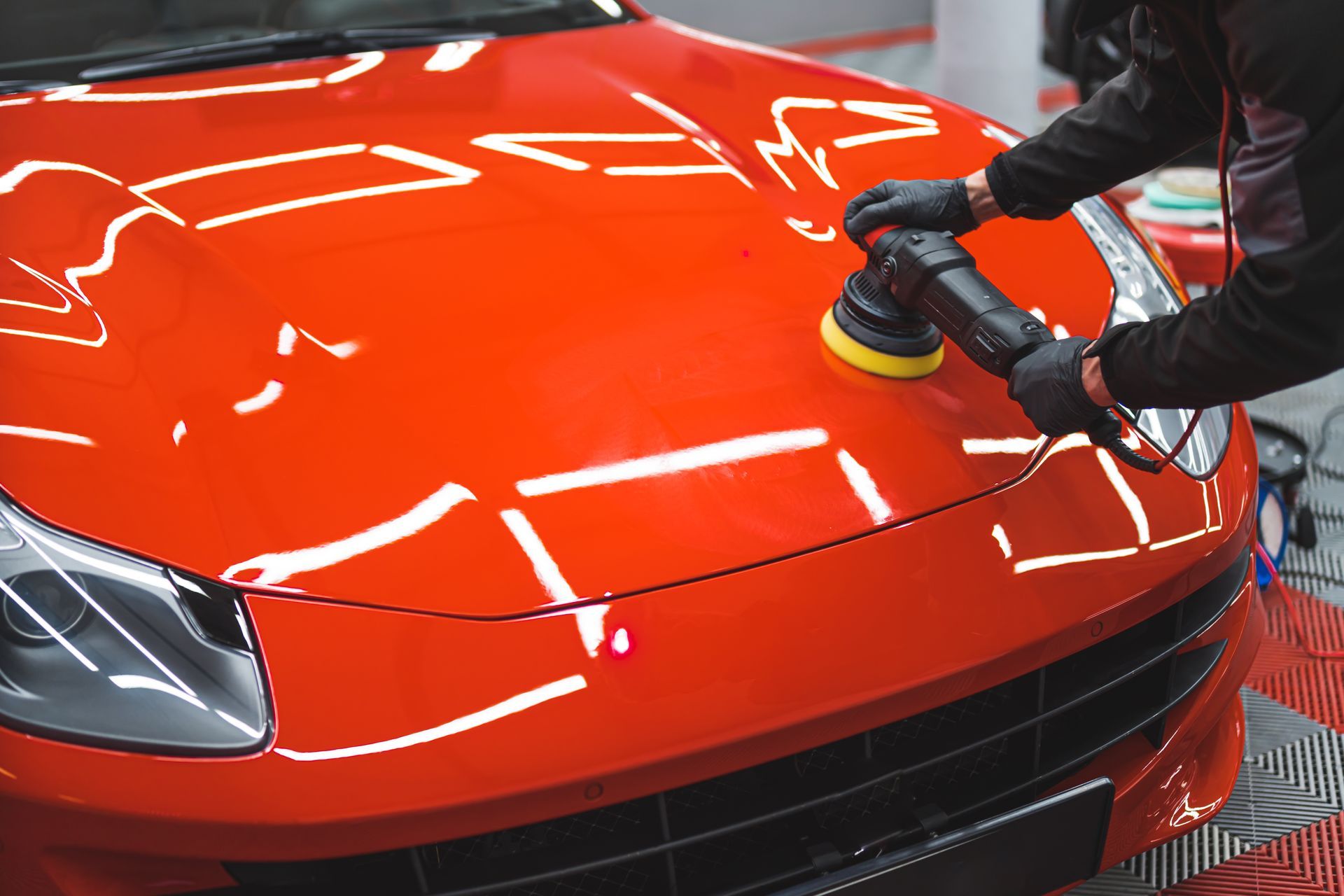
The correction process begins with clay bar treatment to pull embedded fallout and contamination from the gelcoat or paint surface—the same contamination-first sequencing that applies to automotive correction, but with closer attention to the porosity of fiberglass material that can trap particles at a shallower depth than clear coat. The surface is then stripped clean before polishing begins to ensure that machine pads are working against bare material rather than pushing residual contamination deeper. Machine polishers with cutting compounds and professional-grade pads run across the surface in monitored passes under bright LED lighting, leveling oxidation, swirl marks, and light scratches by reducing the surrounding material to a consistent depth. LED monitoring continues throughout each pass so defect removal is confirmed in real time rather than assessed after the polisher is already off the surface.
Arrange a surface evaluation with Caldwell Mobile Detailing LLC to confirm the degree of oxidation and what correction stages your boat or RV gelcoat requires.
How Gelcoat Correction Differs from Standard Paint Polishing
The compound and pad selection for gelcoat correction is not interchangeable with automotive polish protocols. Gelcoat is an unreinforced polyester resin surface without a separate clear coat layer, which means cutting compounds must be calibrated to remove oxidation from the material itself without burning through to the underlying fiberglass laminate. Pad hardness and machine speed settings are adjusted based on how deeply the oxidation has progressed—a surface that chalks uniformly across the hull requires different initial passes than one with isolated heavy oxidation around water line staining or trailer contact zones.
Once correction is complete, the change in a fiberglass surface is clearly visible: oxidized areas that appeared white or chalky return to the original color depth and hold a wet-looking gloss that was absent before polishing. Swirl patterns that scattered reflected light become invisible at viewing angles where they were previously obvious, and the overall color appears several shades deeper and more saturated because oxidation was scattering the incoming light rather than allowing the surface to reflect it cleanly. The same observable shift applies to RV fiberglass siding that has developed a hazy, faded appearance after repeated UV exposure in uncovered storage.
Gel correction addresses surface-level oxidation, swirl marks, and light scratches—it does not restore fiberglass that has cracked through to the laminate or gelcoat that has been ground through to bare fiber. Evaluating the depth of damage before correction begins is part of what the LED inspection step accomplishes, allowing the technician to identify areas where material has already been removed past the point where polishing can improve the surface and where alternative repair approaches would be needed instead.
Common Questions About This Service
Boat and RV owners dealing with gelcoat oxidation often have questions about what the correction process can and cannot address, and how the work differs from what is typically done during a basic detail. The answers below focus on the correction process itself.
Why does gelcoat require clay bar treatment before machine polishing?
Gelcoat's porous surface traps rail dust, mineral deposits, and organic material at a level that polishing compounds cannot dislodge—clay bar shears this contamination off the surface before pads make contact, preventing the machine polishing pass from grinding embedded particles across the material and creating additional scratching.
How do you determine which cutting compound is appropriate for a specific gelcoat condition?
The decision is based on oxidation depth and surface hardness assessed during the LED inspection before polishing starts. Heavily oxidized surfaces require more aggressive cutting compounds and firmer pads to remove enough material to reach unoxidized gelcoat, while surfaces with light hazing or swirl marks use finer compounds to minimize total material removal.
What does stripping the surface before polishing accomplish, and why is it a required step?
Stripping removes wax, sealant residue, and any product layer remaining on the surface so cutting compounds make direct contact with the gelcoat rather than working through a coating layer that dilutes their effectiveness and reduces the technician's ability to assess correction progress accurately.
How does the LED lighting setup change the outcome of gel correction compared to working in natural light or shop lighting?
LED inspection lighting reveals surface defects at angles that natural light does not reproduce consistently—it shows polishing high spots, residual swirl patterns, and areas where oxidation remains before the machine is moved to the next section, preventing the discovery of missed areas only after the equipment is packed and the job is considered complete.
What is the difference between gelcoat correction on a boat hull and correction on an RV fiberglass sidewall?
Hull gelcoat is typically thicker and faces water contact and UV exposure from above, while RV sidewall fiberglass is thinner and more uniformly exposed to UV across its full surface. The polishing approach accounts for this difference through pad pressure and machine speed settings—RV sidewalls require more conservative material removal to avoid cutting through a thinner overall surface layer.
Caldwell Mobile Detailing LLC also performs paint and gel correction in Interlochen, Kingsley, Acme, Grawn, and Fife Lake. If your boat hull or RV fiberglass has developed oxidation, swirl marking, or visible surface damage, contact Caldwell Mobile Detailing LLC to schedule a site evaluation and surface assessment.