
Film That Holds Its Color Through Multiple Seasons
Auto window tinting in Traverse City for glass carrying pollen residue, film bubbles, and heat buildup
Cheap dyed plastic film turns purple and bubbles within a single season of heat exposure—a failure pattern that starts at the corners and edges where the film lifts first. Ceramic window tint is a different material that resists discoloration and maintains heat rejection across multiple seasons because the tinting agent is embedded in the film rather than dyed onto a plastic carrier. Caldwell Mobile Detailing LLC installs ceramic film as a mobile service in Traverse City, bringing the self-powered unit to your driveway so the work is done where the vehicle sits.
The installation sequence begins with razor blade scraping of every window surface to remove pollen, dust, and any residual debris. This step is not optional—even particles invisible to the eye cause bubbles under film because the adhesive bonds to the particle rather than the glass. Once the glass is completely clean, thick ceramic film is laid onto the surface and a squeegee is used with force to push water out uniformly from center to edge. Corners receive particular attention during this stage because a fold or gap at a corner is where film begins to peel when windows are rolled down. Proper film geometry at the edges prevents that separation from starting.
Arrange a window inspection to confirm the condition of your current glass and discuss film options before installation day.
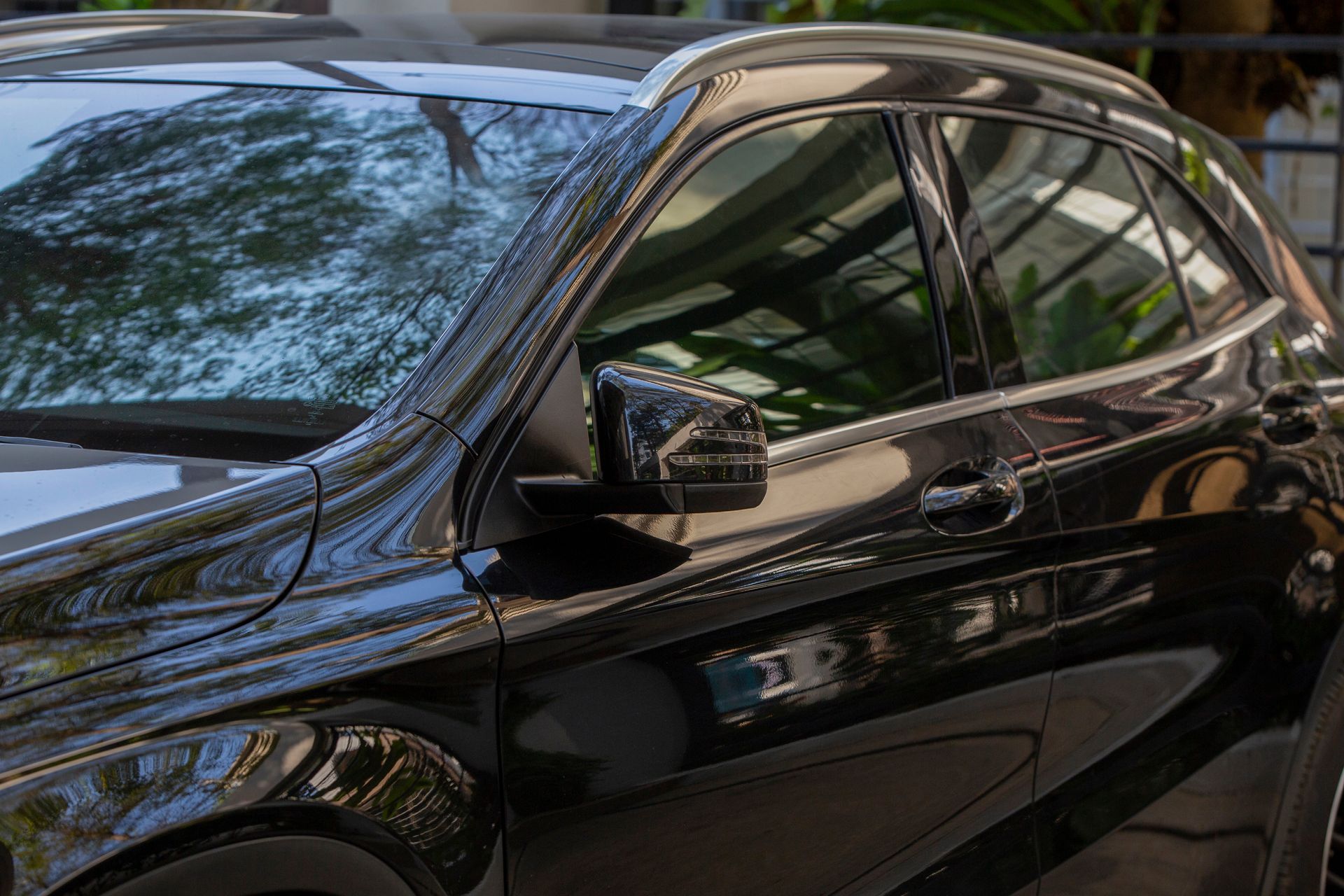
What Separates Ceramic Film From Dyed Plastic Tint
The core difference between ceramic and dyed film is where the functional material sits. Dyed film uses a colored plastic layer to block light, and that dye breaks down when repeatedly exposed to heat—producing the purple cast and brittleness that leads to bubbling. Ceramic film contains nano-ceramic particles suspended within the film structure itself, which do not break down under UV exposure and continue to reject infrared heat even as the film ages. Caldwell Mobile Detailing LLC installs only ceramic film because dyed film failures generate callbacks that ceramic film does not.
After installation, the interior of the vehicle is noticeably cooler when parked in direct sun because ceramic film rejects infrared heat rather than simply blocking visible light. Steering wheels, dashboards, and seat surfaces that previously became too hot to touch immediately after parking remain significantly lower in temperature. The film also maintains optical clarity—ceramic tint does not produce the slightly hazy or blue-shifted appearance that some dyed films carry, particularly when viewed at an angle.
Kingsley and Fife Lake vehicle owners frequently contact Caldwell Mobile Detailing LLC after a previous dyed film installation begins to purple or bubble, asking whether the old film needs to come off before new film goes down. It does—installing over failing film produces immediate adhesion problems, and the razor blade scraping step at the start of the installation process is the appropriate method for removing degraded film before the new ceramic layer is applied.
What Property Owners Ask About the Tinting Work
The following questions address how ceramic window tinting is installed, what makes installations succeed or fail, and what to look for in finished work.
Why does glass need to be scraped with razor blades rather than just cleaned with a spray?
Spray cleaning removes surface dust but leaves behind bonded residue, dried pollen, and microscopic particles that sit in the adhesive interface and create bubble points. A razor blade is the only tool that mechanically removes bonded contamination flush with the glass surface.
What causes window film to peel at the corners when windows are rolled down?
Peeling at corners results from incorrect film geometry during installation—if the film edge is not laid with proper tension and contact at the corner, rolling the window creates a shear force that separates the film from the glass at that point first.
How does ceramic film maintain heat rejection as the film ages?
Ceramic nano-particles embedded in the film structure do not degrade with UV exposure the way dye molecules do, so the film's infrared rejection properties remain consistent across multiple seasons rather than declining as the material breaks down.
What should you look for in freshly installed film to confirm the application is correct?
Correctly installed film shows no bubbles, no edge gaps, and consistent color across the full window surface with no lighter or darker patches. Corners should be flush to the glass with no visible lift when you run a finger along the edge.
Does existing failing film need to be removed before new film is applied?
Yes—installing ceramic film over bubbling or delaminating film produces immediate adhesion failure because the new film bonds to the failing layer rather than the glass. Razor blade removal of all old film is required before new installation begins.
Caldwell Mobile Detailing LLC also installs ceramic window tint in Interlochen, Kingsley, Acme, Grawn, and Fife Lake. Call (231) 633-7512 to confirm glass condition and set an installation date at your location.