Seats and Carpets Cleaned at the Source
Interior Detailing Services in Traverse City for vehicles with embedded pet hair, spill residue, and odors that vacuuming alone cannot remove
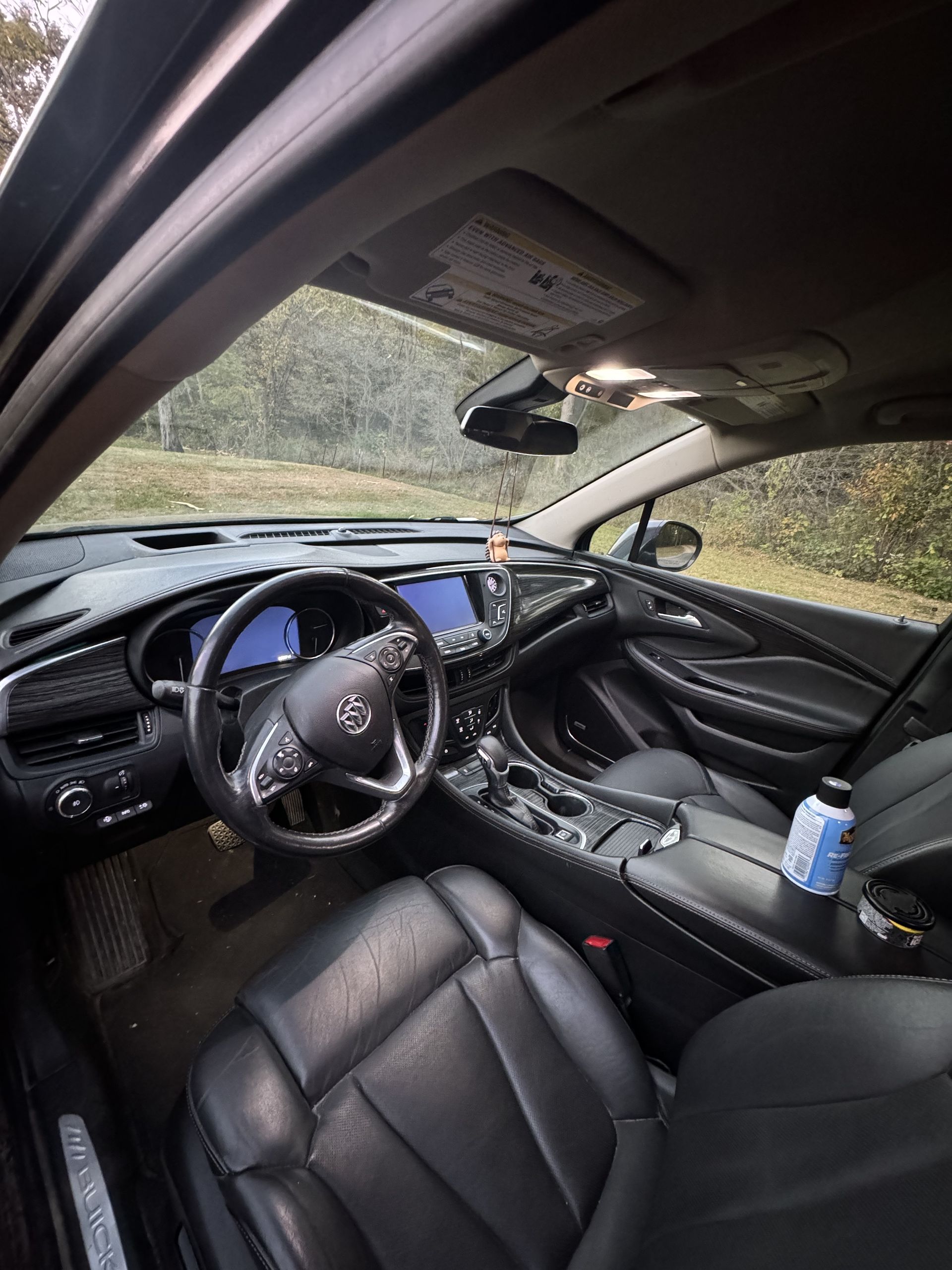
A thorough interior detail begins with what a standard vacuum misses: the compressed grit along seat seam edges, dried liquid in cup holder channels, and oily residue coating dash vents that recirculates odor every time the fan runs. Caldwell Mobile Detailing LLC handles interior detailing from a fully self-powered mobile unit that arrives at your driveway in Traverse City with no requirement for an outlet or water access at your property. Interior detailing is the top-selling service year-round for Caldwell Mobile Detailing LLC, handled at a pace of two to three vehicles per month during slow winter months and three to four vehicles per day from March through November—volume that reflects consistent local demand rather than seasonal spikes.
The detailing sequence runs from worst accumulation zones outward. Deep vacuuming clears trash and loose debris from all crevices including seat seams and floor edges before any wet process begins. High-temperature steam then breaks down sticky residue in cup holders, vent louvers, and door panel crevices—temperatures high enough to release bonded grime that would require physical scraping if left untreated. Deep extraction cleaning follows, pulling embedded dirt, spill oils, and organic material out of carpet and upholstery fibers rather than simply surface-cleaning them. Leather surfaces receive thick cream conditioning designed to prevent the cracking pattern that develops when leather dries and stiffens from heat exposure in vehicles parked in direct sun.
Schedule an interior detailing appointment with Caldwell Mobile Detailing LLC to assess what specific processes your vehicle's carpets, seating, and panels require.
How Each Step Addresses a Specific Contamination Type
Pet hair presents a unique removal challenge because the barbed structure of animal hair anchors it into upholstery weave in a way that resists straight suction. The detailing process addresses this mechanically before vacuuming—agitating fibers to release the anchored hairs so extraction equipment can capture them rather than simply compressing them deeper. Spill residue behaves differently: dried liquids bond to carpet and fabric backing as they cure, and the deep extraction process uses hot water injection combined with aggressive suction to re-liquefy and pull the bound material out of the substrate.
After interior detailing is complete, the change inside the vehicle is specific and observable: fabrics feel lighter and return closer to their original texture, the odor that was recirculating through the HVAC system is no longer present when the fan runs, and cup holders and door pockets that had become tacky or discolored return to a cleanable hard surface. Vehicles that have carried dogs, transported catch from lake trips, or accumulated a full season of in-and-out use with lake sand on boots show the most visible before-and-after contrast after extraction cleaning.
Interior detailing is also included as a complementary service with three, five, and nine-year ceramic coating packages, which matters for owners who want protective coatings applied to a surface that is fully cleaned before the coating process begins. Conditioning cream on leather is applied as part of the standard interior service rather than as a separately priced add-on, because leather that dries between detailing appointments will crack at panel seams and headrest edges before the next service interval regardless of how the rest of the interior looks.
Answers About How the Work Is Done
Interior detailing involves a layered sequence of processes rather than a single cleaning pass, and understanding the order and purpose of each step helps set accurate expectations before the appointment. The questions below address the process specifically as it applies to vehicle interiors.
How does high-temperature steam clean car vents and cup holders without damaging the surrounding materials?
Steam is applied in short, directed bursts at close range, which releases stuck grime through heat and moisture without saturating the underlying plastic or wiring. The technician controls dwell time by distance and duration rather than applying steam in prolonged contact with any single surface.
What does deep extraction accomplish that steam alone does not?
Steam loosens and sanitizes surface contamination and reaches into small gaps, but extraction equipment combines hot water injection with mechanical suction to physically pull dissolved material out of the fiber—necessary for spill residue and oils that have bonded into the carpet backing rather than sitting at the surface layer.
Why is vacuuming done before any wet process during interior detailing?
Wet processes can cause loose debris to clump and adhere to surfaces if applied before dry extraction—vacuuming first ensures that steam and extraction equipment are working against embedded contamination rather than pushing loose material deeper into seams and upholstery backing.
How does interior detailing in Traverse City address vehicles used frequently for lake access?
Vehicles used for lake trips typically carry fine silica sand that settles into carpet backing and seat seams, combined with moisture that promotes organic growth in enclosed spaces. The extraction process targets both the physical sand particles and the conditions that allow odor-causing material to develop.
What indicates that leather conditioning was applied correctly rather than just surface-coated?
Properly conditioned leather absorbs the cream into the material rather than leaving a greasy film on the surface—correctly applied conditioning cream leaves the leather feeling supple and dry to the touch, not slick, because the product has penetrated rather than sitting on top.
Caldwell Mobile Detailing LLC also provides interior detailing in Interlochen, Kingsley, Acme, Grawn, and Fife Lake. If your vehicle's interior is carrying odors, embedded debris, or surface buildup that routine cleaning has not resolved, request a service visit to review what the full detailing sequence will address.